The long history of political violence
Now is added another shooting seeming to have political roots
IT WILL NOT be meant to minimize the shooting death of political pundit Charlie Kirk that we recall some of the history of political violence in America. As some have pointed out, whether one agreed with his views or not, Kirk practiced freedom of expression of his political ideas, a key component American political debate. 1
Stephen A. Douglas and Republican challenger Abraham Lincoln several times debated a key issue of their day: whether there would be slavery in new territories in the West. They were addressing the problem that had divided the nation into two hostile camps and that threatened the continued existence of the Union.2
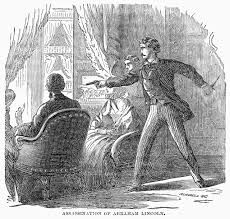
Within a few years, Lincoln was President, and the States were at war with each other over the institution of slavery. Lincoln was hated for his stand, and on April 4, 1864, he was assassinated as part of a conspiracy of Confederate sympathizers. 3 The ideas of the conspirators were not advanced, the Confederates lost the Civil War, and the institution of slavery was abolished.
James A Garfield became the second American president to die at the hands of an assassin. Garfield survived the shooting for a few weeks before succumbing to sepsis caused by his wounds and the unsanitary methods doctors used to treat it. His assassin said he had fulfilled a personal “political mission.” He was later convicted and executed.
On Sept. 6, 1901, President William McKinley was assassinated by a man who thought anarchy was a better form of government than that practiced by McKinley. The anarchist was quickly apprehended and executed for the assassination. Anarchy never caught on.
Not quite a hundred years later, President John F. Kennedy was assassinated in Dallas. It was Lee Harvey Oswald whom history has determined was the assassin. What exactly his motives were is still debated, but generally a mix of personal, psychological and political factors is often cited. Oswald was murdered by Jack Ruby, who evidently thought he should take justice into his own hands. Ruby was tried and convicted, but his conviction was overturned on appeal and he was granted a new trial. He died of natural causes before the second trial could happen. Oswald’s hopeless cause acomplished nothing other than monumental national grief. 4
Partly as a result of the Kennedy assassination, the decade of the 1960s became a period of extreme political turmoil. In 1968 two important leaders were killed. Martin Luther King died by gunshot on April 4, 1968. Just two months later, John Kennedy’s brother, Robert F. Kennedy was shot at close range. MLK’s assassin hoped to silence the cause of civil rights; he did not. Kennedy’s assassin, Sirhan Sirhan, said that he had killed Kennedy because he felt betrayed by the senator’s proposal during the campaign to send military planes to support Israel. The Israel conflict with Palestine continues to this day.
In 1972, George Wallace, was badly wounded and permanently paralyzed by a would-be assassin’s bullets. The motive of his shooter was a desire for fame. He served 35 years in prison before being released, and earlier ths year was released from all conditions of his convictions. He is not famous.
In 1981, Ronald Reagan was shot but survived by a would-be assassin whose motives were psychological. Also injured in that shooting was James Brady, Reagan’s White House press Secretary. Brady suffered severe brain damage, and he became a prominent gun control advocate, which led to “the “Brady Bill,” a background-check measure. Brady died in 2014, and his death was ruled a homicide. Shooter John Hinckley was institutionalized for nearly 30 years after being found not guilty by reason of insanity. 5
On Jan. 8, 2011, Gabrielle Giffords was shot while holding an event with her constitutents in Arizona. Six people died, 13 others were injured, and Giffords was critically injured and left with aphasia and sight loss in both eyes. 6 She has toiled through years of intensive rehabilitation and therapy. Her husband is a former NASA astronaut and U.S. Navy captain who now is a U.S. Senator representing Arizona. The shooter, John Loughner, had a history of mental illness. He pleaded guilty and was sentenced to life without parole.
Donald Trump escaped serious injury when a would-be assassin fired at him as he campaigned in Pennsylvania on July 13, 2024. The shooter was killed by federal agents. He was a young man whose motives were not clear.
And now Charles Kirk can be added to the list of political personalities who are singled out and shot. As history suggests, the motives of people who resort to violence to advance their views are varied. As of this writing, it is not precisely known why the shooter killed Kirk. A young Utah man is in custody, and details about his life are posted on social media, but his motives are not yet understood.
Unfortunately, there is wild speculation, and there are even calls for more violence, some from within the current administration. The governor of Utah has urged calm. He also warned against conspiracy theories spreading online and called celebratory reactions to Kirk's death "so ugly and so dark." 7
It should go without saying, that violence is not an effective way to resolve political or religious views. Unfortunately, gun violence is far too common in American history. Mr. Kirk’s assassin may face the death penalty in Utah once a case is brought to court and a proper jury weighs the evidence and decides the outcome.
https://www.nytimes.com/2025/09/11/opinion/charlie-kirk-assassination-fear-politics.html ↩
https://www.nps.gov/foth/learn/historyculture/the-lincoln-conspirators.htm ↩
https://www.historynewsnetwork.org/article/lee-harvey-oswalds-motives?utm_source=perplexity ↩
https://law2.umkc.edu/faculty/projects/ftrials/hinckley/hinckleyaccount.html ↩
https://www.justice.gov/archives/opa/pr/jared-lee-loughner-pleads-guilty-federal-charges-tucson-shooting ↩
https://www.foxnews.com/media/utah-gov-cox-warns-against-conspiracy-theories-slams-ugly-online-reaction-charlie-kirk-assassination ↩