The Fable of Dorothy's Cuckooland
An imaginary story of success and failure
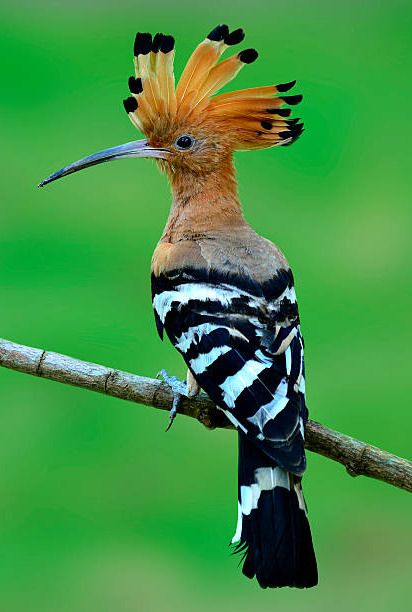
IT WAS A PLAY by Aristophanes that inspired Dorothy Cloud to name her bookshop Dorothy Cloud’s Cuckooland Book Store. On a visit to Italy in her youth as part of an international educational exchange, she had seen the hoopoe in the hills near Florence, and she marveled at its odd behavior and its bold crest. When she read Aristophanes’ play and learned it was the Upupa epops that played the central role in disrupting communications to and from the gods, her admiration for the crested bird increased. A literary reference regarding gods, communication, and a utopian city in the sky seemed like a natural fit for a cozy bookstore.
At first, she thought she would use the Greek word Nephelococcygia, but she correctly anticipated that few Americans would know what to do with the strange collection of consonants. Anyway, as a youngster who was a voracious reader, words such as Upupa epops, hoopoe, and cuckoo brought a smile to her face. All that coupled with her surname (which she wished had been something more normal such as Smith or Barnes) provided a self-effacing joke on herself when she realized she might as well be Cloud Cuckooland.
When customers would sometimes ask about the store’s name, she had opportunity to tell the story of the play and to suggest a purchase of The Birds, which was in the public domain and could be copied, reprinted, and sold at a good margin, which Dorothy did. What’s more, she could refer curious buyers to any of a half-dozen histories on the Peloponnesian War because Aristophanes used his wit to poke a little fun at Athenians and their failed aspirations in Syracuse.
Then a famous author came out with a novel of the same name, and customers rushed to Dorothy’s store to buy it, partly because they thought Dorothy herself might have written it. But no, this was just another of the many creative ways the idea of a perfect place, maybe in the sky or maybe in Arkansas or maybe in Washington, D.C., could be established. There were many books in Dorothy’s shop that explored very bad things such as murder, injustice, corruption and the many dystopian fictions popular in her day. But there were a few positive themes among the books in the store, too. It was these that Dorothy especially liked as a child, and there were more she discovered as an adult. She liked the classics like Pride and Prejudice, Jane Eyre, L.M. Montgomery’s Anne of Green Gables, and of course the Little House on the Prairie series by Laura Ingalls Wilder.
One day a customer said she thought it would be great if Dorothy made a logo of the hoopoe bird and attached it to the sign over her shop. This turned out to be a brilliant marketing idea. With the customer’s help, a design was quickly drawn, and the sign maker was contracted to modify her sign with the new, colorful logo. Customers loved it, and soon Dorothy decided to make bookmarks, pencils, coffee cups, and even T-shirts and baseball caps with the logo. The merchandise began to sell very well, providing another revenue stream for Dorothy Cloud’s Cuckooland Book Store.
As business improved, she conferred with her banker and decided she should open a second shop in a nearby town. It did so well that she opened a third store, and then franchise opportunities and online sales were added, and Dorothy was on her way to becoming very rich.
She wanted to find a special way to put her fortune to work. Because it was Aristophanes’ idea that inspired her fortune, maybe she could actually build utopia of her own. She wanted a place where all the troubled people on Earth could live in peace and tranquility. She read all the science fiction and technology books she could find, but most of the scientific things were over her literary head, so she hired a recruitment firm to find the very best and brightest technical people in the world and set them to work on her utopia.
First one, and then two, and then a cohort of bright people were working 24/7 on her project. At first she thought a voyage to a far-off planet could be undertaken, but then one of her brightest scientists said she had found a way to actually build a city in the sky. Every need of a human being could be accommodated in this astonishing structure, and those with enough resources could contract with Dorothy’s Cloud’s Cuckooland Enterprises to buy their way into the perfect place for their future and the future of the world.
As things came together, Dorothy’s confidence grew. Her businesses were successful, and now she was one of the richest and most successful people in the entire world. When she became the first inhabitant of Cloud Cuckooland, she established herself not only as its creator but also as its absolute ruler. To be part of the community, residents had to swear complete loyalty to her, and anyone who did not was quickly sent back to their misery on Earth. Her power was so immense that no one dared question her. She truly felt infallible.
Even so, she needed a steady supply of new brainy people, and that meant that some would not fit in with the established inhabitants. Some had different facial features and skin color, and some even brought their ritualistic dress with them. One group that felt especially welcome turned out to be highly resented because of their unusual headdress, which resembled the crest of the Upupa epops. Dorothy was in a bind because she needed these people’s exceptional talents, but the discord was threatening her realm. She told everybody to be calm and accept these brainy newcomers and everything would be all right. But distrust grew, and the newcomers were derided as Featherheads. Dorothy felt her power in Cloud Cuckooland was waning, so she began a strategy of fomenting dislike for the Featherheads and vowed to deport them all back to Earth. Her strategy worked, and people rallied around the cause.
As time went on, Dorothy felt very powerful, even though the number of her followers decreased rapidly. What’s more, she was showing her age, and so were her followers. She couldn’t remember things very well, and she suffered from aberrant behavior and delusions of grandeur. Becoming paranoid, she decided to remove everyone, and she was left alone in Cloud Cuckooland where she babbled endlessly to herself about the wonderful things she had done. And then one day she died and, like Aristophanes, was largely forgotten.
Dorothy’s book stores fell into bankruptcy, and the very large inventory of literature, science, history, and art books was sold. A investment group bought the business rights and the logo, opened several book shops, and welcomed customers who enjoyed the calm setting, the perfectly roasted coffee, and the volumes of promising words of all the great poets and writers. All was well with the happy ending to the fable of Dorothy Cloud’s Cuckooland, until somebody got the bright idea to form a perfect community somewhere in Texas or in Florida or maybe in Washington, D.C., and history, as it is sometimes pointed out, repeated itself.