That song is old!
So why bother listening?

Public domain image
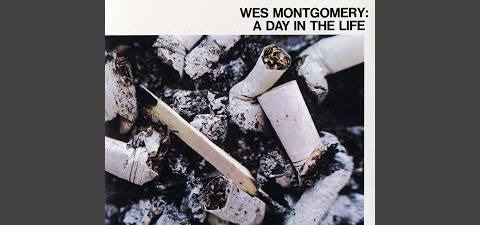
I HAPPENED upon an old Wes Montgomery song the other day. It was from a 1960s album called “A Day in the Life,” and the song was his arrangement of a Beatles tune of the same name.
That tune was released by the Beatles on the album called “Sgt. Pepper’s Lonely Hearts Club Band” on June 1, 1967. I was living in Florida at the time, district circulation manager for a newspaper based in Jacksonville called The Florida Times Union. Lyndon Johnson was president. The war in Viet Nam was on every American’s mind. Some thought the war was a necessary involvement to stop the “domino effect” that would result if we didn’t expel communism from Viet Nam. Others thought the war was unnecessary and foolishly costing many young men and women their lives. The protests were intense, and history, it turns out, is on the side of the anti-war folks. My opinion is that the war in Viet Nam was foolish, and the protests were helpful in ending it. I will also say that war protesters erred badly and shamefully when they directed their protests at the soldiers who fought it instead of at the politicians who ordered it. I recommend Tim O’Brien’s The Things They Carried if you care to read about the soldiers’ perspective and challenges. 1
Montgomery’s version of “A Day in the Life” was produced by Creed Taylor and arranged by Don Sebesky. It was released in September 1967, just a year before Montgomery’s death. It is a fitting symbol of the times; the first line is, “I read the news today oh boy.”
If you don’t know about Montgomery’s guitar, I will tell you this: his style was unique. He adopted a thumb-picking style, abandoning the more common plastic “pick” in order to achieve a warmer sound. In addition, he plucked his tunes out using parallel octaves, a guitar style that had not been used much until he popularized it. Amazingly, he could produce an “up pick” as easily and effectively as a “down pick” because his thumb was double jointed.
Legend has it that Montgomery acquired his thumb-picking style because his amplified Gibson L-5 guitar was too noisy for his neighbors; he needed something quieter to remain on good terms with them. I doubt he ever intended for that neighborly accommodation to result in his now-legendary style.
I like it because I played guitar and sang in a small jazz/pop band called the Individuals Three, even though there were five of us. About all I could master on the guitar was a few chords and an easy strum. I loved jazz guitar and tried and failed to learn it. Listening to Wes was listening to a master.
Something else though: Wes is long dead. His musical genius went with him into the ground or wherever his family put him. So, listening to Wes now, is listening to a dead genius. It’s very much like reading a dead writer such as Faulkner or Shakespeare.
Often this has seemed to me like such a waste. How many hours did Wes Montgomery practice before he could confidently step onto a stage and perform with other advanced musicians? How many hours did William Faulkner labor to get a paragraph just right and a fine novel completed? What about the virtuosity of violinist Jascha Heifetz? The piano wizardry of Franz Liszt? Their unparalleled skills died with them.
We can learn something about temporary art by considering the mandala, the sand art of Buddhist monks. They will labor for days to create intricate designs of art from brightly colored sand, and then when their project is completed they deconstruct it. The object is to illustrate the impermanence of life.2

Perhaps so, and the creation and metaphor combine painstaking art and illustrated philosophy. For me, it isn’t quite convincing; I’d like to see their art preserved in epoxy or something. A picture, such as the one above, provides some permanence but it can’t capture the meaning of deconstruction. Their art isn’t mine; what they choose to create and then de-create is their own, well, creation.
The recording captured Wes Montgomery performing and it provides, years later, considerable listening satisfaction. Now you have to admit that’s pretty cool, me listening to Montgomery play nearly 60 years after he made the recording. It would have been even cooler to see him in person; I never had the opportunity. His great musical talent — great talent in any art — is fleeting. It dies, just as the Tibetan monks illustrate.
Of course, I’m only stating the obvious. But, look here; there is much for which to be thankful, and enjoying genius long after mortality catches up with it — and us all — is not something to take for granted.
or here:
https://music.youtube.com/watch?v=psvs4axQ10A&si=2HzVv8pOSHKOFcYR