Solitude and reason
Why periodic retreats restore soul and sensibility
THIS REMARK is attributed to Aldous Huxley, and I came across it via a Substack post on “Philosophors.” 1 The quote precedes a suggestion for follow-up thought, and I decided to take up the challenge. I invite you to give it a try, if for no other reason than to learn something new, which was my objective. Here’s the follow-up question:
“When the presence of others alters one’s ability to reason clearly, does it reveal that human consciousness is less an autonomous force and more a fluid construct shaped by the psychological gravity of belonging and fear of isolation?”
Interesting to me, because I am one who likes occasional breaks from the crowd. My partner calls it “social sabbaticals,” and I think the term applies rather well. When too many social events compile, I invariably long for some “recharge time,” which usually means being alone. This is a common characteristic of introverts. Extroverts recharge with heightened social activity. Introverts need to get away.
For many years, I thought this was a character flaw, and I faulted myself for at times being inward. But then I learned that, lo and behold, people are different. Now I love my times with friends and family, love a party, love to converse, love to make new friends — and love to take a long hike by myself. For many people, constant association with crowds both large and small can be stultifying, and periodic withdrawal a necessary antidote. For others, being alone is a fearful state that must be reversed by social interaction.
The idea of crowds usurping individual reasoning, however, presents other questions that require some nuanced answers.
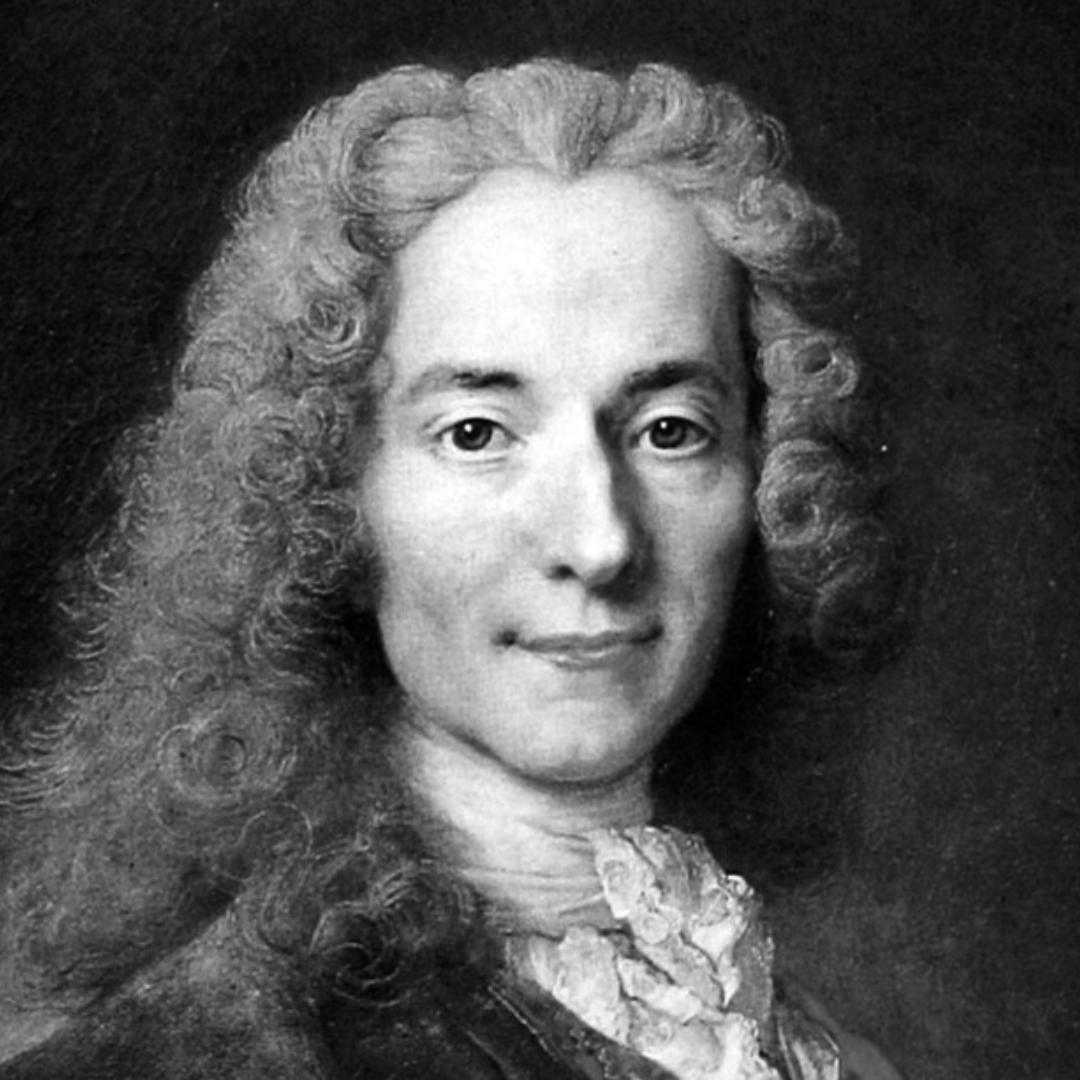
It helps to put the idea into its historical perspective before going too far with it. Huxley may have got the idea from Gustave Le Bon, a French polymath who compiled his study in a book called The Crowd, A Study of the Popular Mind. The premise is that directly or tacitly embedded in a crowd, an individual will, or at least can, lose ability to reason. 2 Without going into a lengthy history, let’s just say that during his lifetime (the late 19th century) radical change was under way. Traditional pillars of European society were challenged, and “the proletariat” was emerging as a powerful political force. Were the “masses” prepared to self-govern? Did they possess enough educational background? Aren’t people who are “landed” and educated better prepared for leadership? Could democracy be a road to ruin? To perdition?
Le Bon’s ideas can explain, for example, the events of Jan. 6, 2021, when people abandoned their sense of propriety and stormed the U.S. Capitol. Remarkably, this event is retold in wildly different versions depending on the “crowd” to which a person shares perspective. The events of Jan. 6 were well chronicled on television; millions witnessed them. And yet, when it came to assigning blame, the country was sharply divided and grossly defensive. Even today, raising the fact of the event can prompt angry rebuttals, usually to defend the supporters of the defeated presidential candidate, Donald Trump. Others insist he caused the whole sordid affair and should be held accountable for it.
This illustration, however, goes only so far. There is another side to the coin: Ambitious men hungry for political advantage and control saw an opportunity. Could harnessing crowd behavior serve the objectives of the autocrat? Le Bon …
Le Bon appears to be arguing for leadership by well-reasoned people of high station. Put another way, he feared crowd rule, and he implied it would be a flaw in a form of government that placed political power in the people.
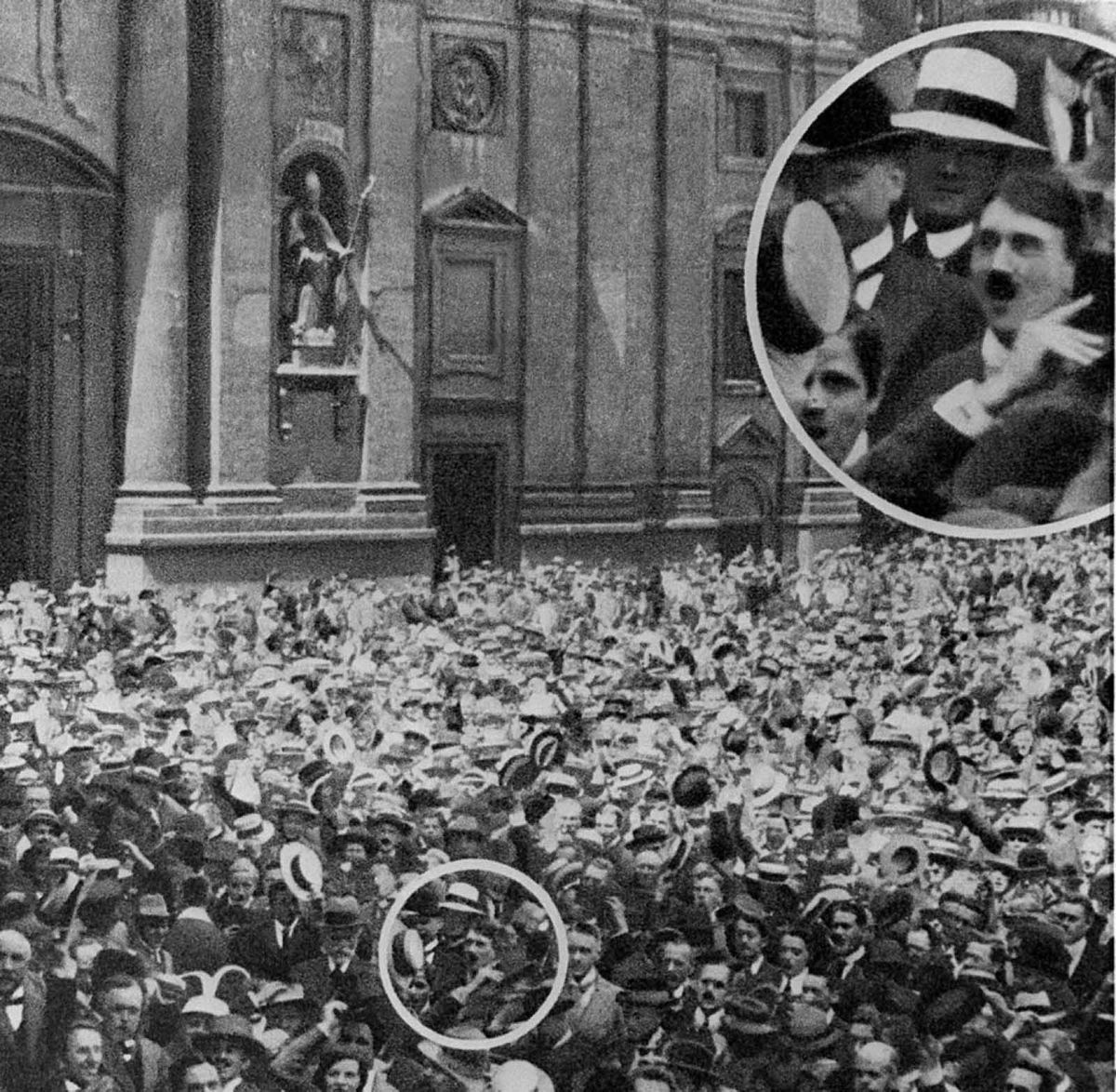
At the same time, ironically, his ideas about crowd behavior suggested an opportunity to some historical figures, Adolf Hitler, especially, but also Mussolini and Lenin. What may have attracted Hitler, for example, is the ability to master crowd control, to be one of those “thuggish men of action” referred to above. Properly captivated, a crowd can be a very useful tool to a despotic leader.
Does the crowd suspend the individual’s ability to reason, or does the crowd have within it a power of collective thinking superior to that of a single individual? Could it be either way?
Americans generally love the ideas declared in the Bill of Rights, the Preamble, and the Constitution, that “we the people” are quite capable of managing our affairs. For others, “the people” have neither self control nor ethical foundation for self-governance, and therefore they must be managed by authoritarian, spiritual, or monarchical leaders.
A very popular argument today makes the point: “No Kings,” a reference to the Declaration of Independence from the monarchy of English rule, has become a popular rallying cry against authoritarianism, and protesters by the thousands have turned out for rallies in many places in the U.S. To put faith in a single individual is to relinquish the very principle on which this country was founded. Beware! these protesters say; we exist because we rejected monarchy, and we do not now want to embrace it, or some fascist variety of it.
For me, yes, there is frequent need to escape the crowd. This may result from too many consecutive social engagements, but it also may result from too much social media influence such as Substack, news sources such as the New York Times, The Guardian, or the Wall Street Journal. A break affords opportunity to regain a personal perspective, to reflect on what I’ve heard and read, and, more importantly, to sort out how my brain and emotions are reacting to the complexity of information. It’s a kind of adult-style “time-out” that I not only welcome, but which I truly need. By thinking through Huxley’s quote, for example, I came to see a connection between my introversion and the potential for crowd control through social media.
At the same time, there is a definite value to a “crowd” in the form of a democracy, but with qualification. Our democracy depends on the collective wisdom of a great diversity of individuals who prepare themselves to accept the enormous responsibility of self-governance. Education is an essential ingredient; otherwise there is, in fact, a potential for a despotic leader to gain control of people who suspend individual thinking and form a mob. Free public education, as initiated by settlers and early American leaders, continues to be essential, and affordable higher education is an important “icing on the cake.” Rather than denigrate free public education and higher education, we do well to redouble our efforts to support it. And, to keep it focused on facts, religion should be left to parents and not required of public educators. Establishment of any religion is a contradiction and should not be permitted, as the founders stipulated.
Suggestion: What about you? Try your hand at “drilling down” on the Huxley/LeBon idea. How would you structure your ideas? I’d love to know. By the way, I don’t “know” these things off the top of my head. I use the many tools easily available to any writer and thinker. Ideas come and go, and some are worth a pause to dig a little deeper.
- The Wisdom Letter #345✹ For today’s edition of Wisdom Letter, we have carefully curated five bite-sized quotes from brilliant thinkers such as Aldous Huxley and Montesquieu, each paired with a philosophical question designed to provoke deep reflection.
https://books-that-can-change-your-life.net/the-crowd-a-study-of-the-popular-mind/ ↩
https://standardebooks.org/ebooks/gustave-le-bon/the-crowd/t-fisher-unwin-ltd ↩