Research
Knowledge expands, but how best to use it?
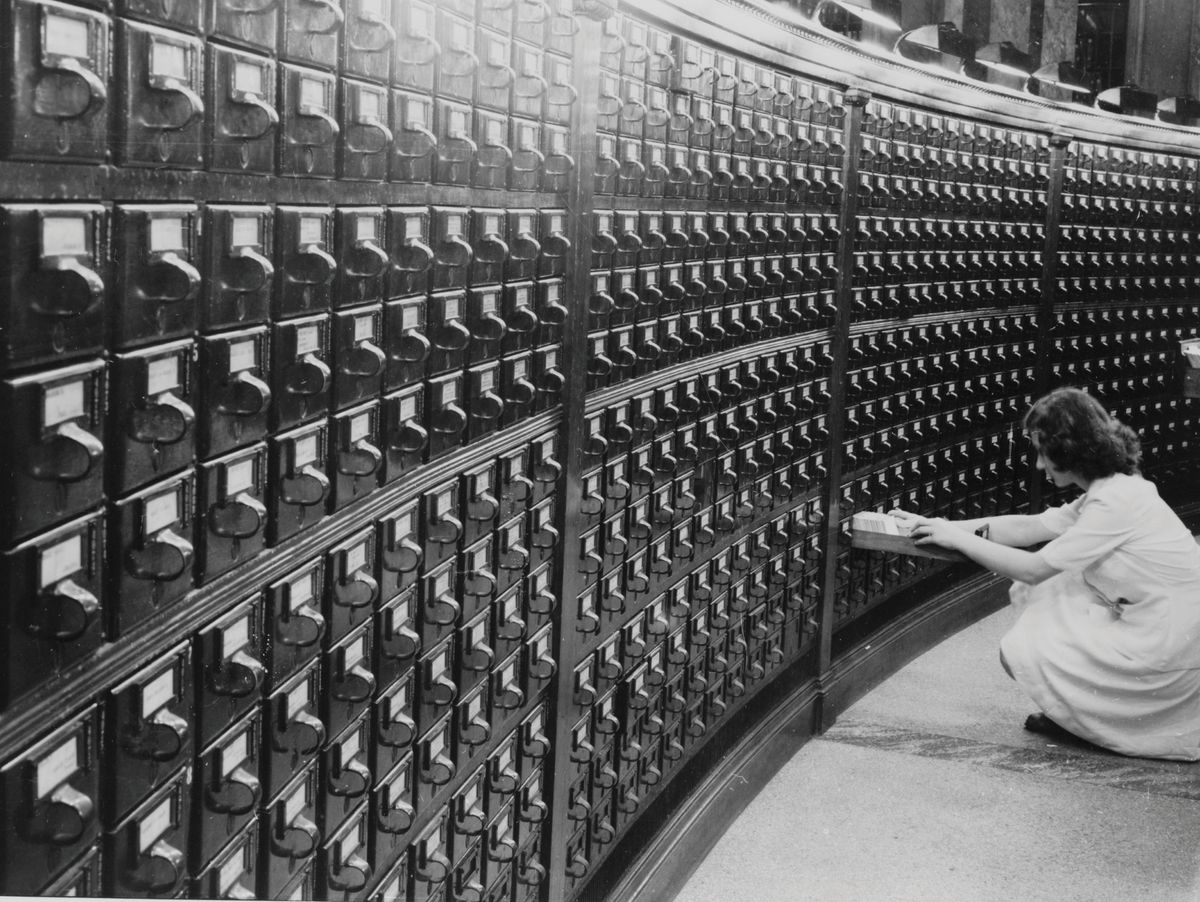
YEARS AGO I READ a book by Denis Diderot, a French thinker who had the ambitious idea to assemble in a book everything the world needed to know. He called it Encyclopédie.1 I remember at the time being fascinated that the set of Collier’s Encyclopedia2 my father bought for our family back in the 1950s had a predecessor. Of course it did, but it hadn’t occurred to me.
I found the book, a used copy, in a favorite called Smith Family Bookstore in Eugene, Oregon. It appears I paid $5 for it. I don’t remember too much about it, except that Diderot collaborated with Voltaire for a segment on Geneva. Voltaire?
Jean Le Rond d’Alembert was Diderot’s associate in editing the tome, and he worked with Voltaire on the entry about Geneva. It turned out their perspective was somewhat jaded, and readers objected.
I have often wondered how d’Alembert and Diderot would react if they could suddenly enter a time machine and visit the 21st century. What fun it would be to say, “Yo Denis, you know what ChatGBT is saying about your Encyclopédie? Check this out …”
We could go on, asking if he could guess how libraries started indexing the books that accumulated in libraries. We could use an AI platform, as I did to discover a photo like the one above. When he asks what’s in the drawers, I could find an image like the one below using my hand-held computer. He would no doubt say, “your what?”
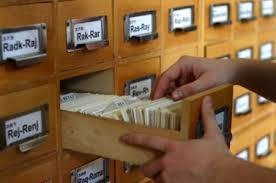
The utility of so much information in the palm of one’s hand is astonishing enough, and even more so when one sits down to research an essay. My friend the reference librarian is not only an expert in the filing systems used “in the old days;” she is expert on how to access any variety of research materials using modern search engines and artificial intelligence platforms. “Librarian” has come to involve a raft of specialty.
I will touch on some of the many problems associated with AI later, but for now let’s focus on just one huge utility: research. I worked from memory while entertaining the idea of an essay on research, but when I needed to verify my memory, which I have come to liken to a sieve, I turned to the AI platform Perplexity.
I had written earlier on the evolution of AI, citing an newspaper article I wrote in the 1970s on a speech given by a man who grew up in the small town where I worked. I wanted to read what I wrote again. I remembered his name: Dr. Terry Winograd,4 and I remembered something of his speech. I thought he might have predicted how computers would become powerful educational tools. So, I turned to Perplexity, and before long had in front of me the very article I only vaguely remembered. Under my “byline” was the following lede:
‘Computer technology will come to the classroom within 10 or 20 years in a form that will give students an ‘assistant’ to help them learn, make notes, even write a term paper.’
You may think I have a stack of articles I wrote in my journalism career, but I don’t. Instead, Perplexity referenced an archive called Newspapers.com. Consider the irony: Nearly 50 years after a cub reporter for a small-town newspaper wrote about futuristic computer capabilities, here I was using the very same predicted technology to find an old story I wrote about it.
In itself, this isn’t too amazing. It has long been possible to find archived newspaper articles, but certainly not in the comfort of one’s home office, and certainly not with such speed.
While AI is top-of-mind in the public’s current consciousness, it’s important to realize that artificial intelligence has been in the making for decades. Its fearsome potential is being increasingly reckoned with. The benefits are wonderful, but the possibility, or inevitability, that it can go off on its own, making decisions with no awareness or control of human beings, is alarming.
What impact will AI have in the classroom? Will students cheat their way through school? What happens when someone questions them about something they’ve “written” only to discover they have little recollection of it, because they actually never wrote it in the first place?
Wondering if Dr. Winograd has concerns, I did another search using the prompt “Does Dr. Terry Winograd have concerns about artificial intelligence?”
There is a growing body of study identifying other concerns. At Massachusetts Institute of Technology, researchers investigated behavioral consequences of relying on AI to do one’s actual writing. They discovered relative cognitive decline in users who depended on Large-Language Model (LLM) machines to do writing projects. By contrast, those who used their brain when constructing an essay showed no decline. The implication is clear: writing “exercises” the brain, but reliance on AI for writing leads to a kind of cognitive dormancy.7
As Voltaire’s essay on Geneva wasn’t factually supportable, AI likewise can return bad information. One should check the footnotes to be more confident that the information so quickly delivered came from a reliable source. Most AI platforms I have used do report the source of their information. Perplexity, for example, cites and links to underlying articles, a very helpful tool for a researcher.
As with most technological developments, bad news comes with the good. Yes, AI is wonderful for getting to information quickly. And yes, it can report wrong, even malicious, information. It can seem “real” and almost human, but it isn’t. Its algorithms are dishonest; they have become sycophants, helping users believe they are asking brilliant questions.8 The have been known to provide emotional and medical counsel that is dangerous, perhaps even fatal.
In the classroom, AI might be used to help students discover how to research and write about various topics, but if students deny themselves the opportunity to use their brains, their “education” will in the long-term be disappointing.
Having had these discussions with younger people in high school or university has shown me that students are sometimes very aware of the pitfalls of using AI, and they discipline themselves not to take shortcuts. Are these attitudes commonplace among school children, or is it just a handful of excellent teachers who find ways to teach about its utility and its threat?
I can’t answer that question, but I remain hopeful that the speedy access to vast troves of human knowledge will help mankind to a brighter future, perhaps one made more complete by thinking, writing, and learning.
Denis Diderot, Encyclopedia, translated by Nelly S. Hoyt and Thomas Cassier, Bobbs Merrill Co. New York, 1965. ↩
The entire set is available for borrowing at: https://archive.org/details/colliersencyclop0020unse/page/18/mode/2up ↩
Greeley Daily Tribune, Saturday. January 29, 1977, Page 7. ↩
https://www.perplexity.ai/search/does-dr-terry-winograd-have-co-BaJWc2H1SGyKWtheOKrUXw ↩
https://www.media.mit.edu/publications/your-brain-on-chatgpt/ ↩
https://www.law.georgetown.edu/tech-institute/insights/tech-brief-ai-sycophancy-openai-2/ ↩