The Body Electric
Whitman, Woolf and Democracy
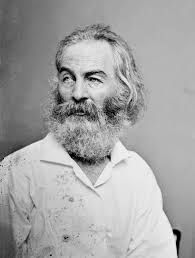
I Sing the Body Electric, Walt Whitman wrote more than 170 years ago. 1
The body electric? What was he thinking?
Whitman’s unusual way of expressing his ideas became an American classic, part of his free-verse epic, Leaves of Grass. The poem evokes a variety of interpretations, but it unavoidably is Whitman’s paean to democracy. Pieced together in nine sections, The Body Electric likened the community of man to its diverse bodies of individuals. His homage was to the beauty and sanctity of human beings, regardless of color or station.
How does the elevation of human-kind in poetry relate to the elevation of the individual in political theory? Does appreciation for the bodies of all men and women apply to respect for the inclusion of all voters at the polling places?
And in this vein, we may as well ask more questions about the state of our democracy:
Has democracy failed us? Have we tarnished it? Do we tire of its disorder? Do we fidget as its cumbersome machinery grinds on and on in process? Do we long for unity, despise difference, and fear until fear is all we have? Do we think a strong, unencumbered leader would be best?
Is democracy ultimately a political system that places faith in humanity? In community? In equality? Or do we wish now to limit participation in order to ensure our grip on power? Do we think we’ve discovered a golden king who alone can put us on a track to greatness? If so, we will need to admit that such a system as his has nothing to do with democracy.
Whitman expressed his giant intellect in poetic terms that had readers on both sides of the Atlantic pondering his thoughts — Virginia Woolf (fondly) for one; D. H. Lawrence (suspiciously) for another.2 His free-verse method allowed him access to common readers, not just the well-educated, snobbish folks who “come and go, talking of Michelangelo,” as T.S. Eliot wrote in his “Love Song of J. Alfred Prufrock.”
For Whitman, the concept of “I” is to the community of man as a blade of grass is to the meadow. “Look for me under your boot-souls,” he wrote. His ideal of a sacred individual among a community of equals is the epitome of democracy ideals.
This was a concept broader than that on the minds of the framers of the Constitution, many of whom held slaves, some 87 years earlier (four score and seven years, as Abraham Lincoln put it). They did not debate the equality of slaves; they argued about the value of a slave for Southern representation in Congress. The founders of the United States were done with monarchies and fickle kings, and so, the rough and unfinished idea of self-government was declared in 1776 and eventually won with the Treaty of Paris in 1784.
Four score and seven years later, Lincoln was presiding in the time of civil war principally over the institution of slavery. In his Gettysburg Address Lincoln declared that ”all men are created equal,” and he meant black people as well as all others.
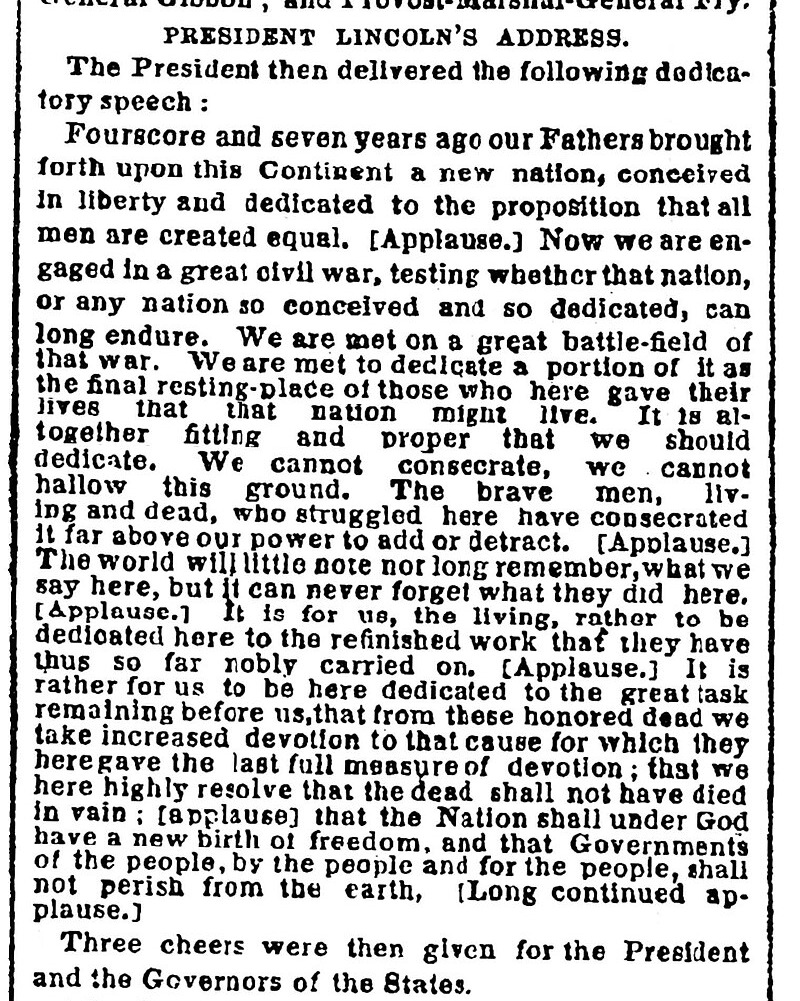
Lincoln kept his speech short (just 272 words), perhaps intentionally making it accessible to the common person, not just the ruling elite of both North and South.
For Whitman, writing during the years before and after the Civil War, democracy was the Great Enfranchiser, although inclusion in voting privilege had not yet been far extended. Women weren’t given federal guarantee of suffrage until the 19th Amendment passed in 1920 (although a few states permitted women to vote much earlier). 4 Enfranchisement broadened in the 1960s, thanks largely to Lyndon Johnson and his championship of the Civil Rights Act of 1964.
And there are now those among us who behave as if they do not like broadened enfranchisement, and they actively work to suppress it. Their motives usually are couched in language suggesting that they are heroically fixing voter fraud and Democrats’ scams to dilute white-voter prominence by bringing in people from Mexico and other Central American countries and having them vote illegally. Neither of these claims can be verified because each is baloney. 5
But let’s review what Whitman wrote regarding inequality:
The man’s body is sacred and the woman’s body is sacred,
No matter who it is, it is sacred—is it the meanest one in the laborers’ gang?
Is it one of the dull-faced immigrants just landed on the wharf?
Each belongs here or anywhere just as much as the well-off, just as much as you,
Each has his or her place in the procession.
(All is a procession,
The universe is a procession with measured and perfect motion.)
Do you know so much yourself that you call the meanest ignorant?
Do you suppose you have a right to a good sight, and he or she has no right to a sight?
Do you think matter has cohered together from its diffuse float, and the soil is on the surface, and water runs and vegetation sprouts,
To writers in Great Britain who lived under a monarchy, these words resonated. Virginia Woolf viewed the idea of common worth in the context of her own home country’s colonialism. To British elite, the responsibility of the victims of their conquests was to capitulate to the superiority of their English rulers, learn their language, and adopt their system of justice.
Even Mahatma Gandhi, trained in English universities and a barrister, was expected by titans of English conquest, especially Winston Churchill, to accept a lower standing among the Empire’s subjects because he was Indian, had dark skin, wore different shoes and dressed differently. Churchill wasn’t subtle about it either.7
Ghandi, a product of India’s caste system, used racist arguments to advocate for a higher status among British subjects. He felt he had been relegated to the same category of subject people as the Blacks of South Africa, and he felt wronged. His haughtiness earned Churchill’s scorn.8
Not unlike the British Empire of Woolf’s days and the India of Ghandi’s day, the United States itself demonstrates its own variety of caste. In her book Caste, Isabel Wilkerson argues that:
Contrast this with Whitman’s Body Electric. The body electric is the body of the American community, its soul. And as he sees it, human body an soul are completely worthy of song and eminence, as much as Michelangelo’s David or Antonio Canova’s Venus Victrix. There is no distinction, Whitman suggests, between such artistic perfection and the “meanest one of the laborers’ gang.”
Woolf uses this model to critique the political problems prevalent in her own day and to offer a vision of what democracy would look like in a more modern world. In her novel, The Waves, Woolf presented six characters who ultimately are decided to be as one.
Researcher Neal Buck puts it this way:
Woolf turns to a single character, Bernard, to wrap up her novel. And there again is the idea of a simple language, “I need a howl, a cry” rather than specious language of superiority and exclusion.
These concepts are not easy to grasp, but perhaps they have not been so clearly before us as they are in today’s political environment. If we think we like the idea of democracy, we should understand it requires us to stand for the idea of enfranchisement, or, to use a politically charged term, inclusion. As much as Churchill is properly admired for his key-person importance in rejecting fascism in the 1930s and 1940s, he remained an elitist persona of a colonial country which lorded it over its subjects.
If we think an alternative to democracy might be better, say, if we had a strong-man system such as Viktor Orbán’s or Vladimir Putin’s, we should recognize the disenfranchisement that it manifests. If we witness efforts to disenfranchise, we should recognize them as attacks on democracy.
The United States continues as the world’s oldest democracy, and it’s worthy, as Wilkerson says, of “a collective will to maintain” it. Which is to say, a little neglect and it erodes as surely as a house of sand.
https://www.poetryfoundation.org/poems/45472/i-sing-the-body-electric ↩
New York Times, November 20, 1863. ↩
https://www.britannica.com/topic/woman-suffrage/The-United-States ↩
https://www.latimes.com/opinion/story/2024-05-26/voter-suppression-race-youth-election-2024-donald-trump-georgia-supreme-court-robin-abcarian ↩
https://www.poetryfoundation.org/poems/45472/i-sing-the-body-electric ↩
Arthur Herman, Ghandi and Churchill, (New York: Bantam Dell 2008) 131. ↩
Ibid. ↩
Isabel Wilkerson, Caste, The Origins of Our Discontent, (New York: Random House 2020) 381 ↩