Metamorphosis
Nature teaches; poets help us see and learn
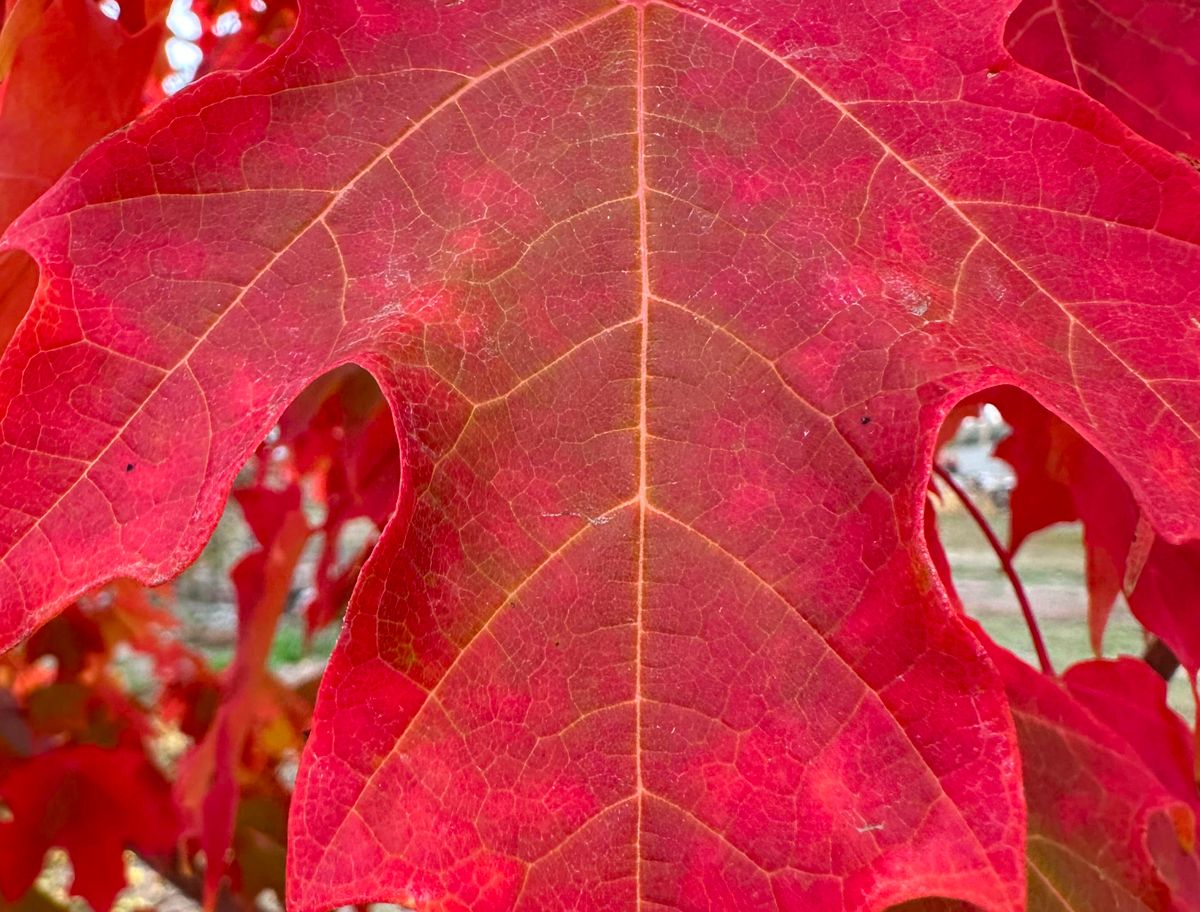
Photo by the author
JOHANN WOLFGANG von GOETHE is most famous for “Faust,’ his epic poem rich with the spirit of the Enlightenment. He famously explored the quest for knowledge by using a character so intent on it that he makes a pact with the Devil to acquire even more.
To be sure, Goethe was himself interested in many things, including science. In another of his poems, he explored The Metamorphosis of Plants. A small and beautifully illustrated book by Gordon L. Miller focuses on this work. The book is a good companion this time of year when we routinely see sights such as captured in the photo above. Miller uses his own excellent photographs to illustrate his book.
What interested Goethe was a fuller understanding of what nature, through close observation, could teach. What he celebrates in his poem is the plant’s ability to regenerate itself. The leaf is perhaps most emblematic of this process because one can readily follow the emerging bud in Spring, the showy photosynthesis in Summer, the flamboyant dying leaf in Autumn, and the dead and decaying foliage on the garden ground in Winter. And then it all repeats itself.
Goethe’s ideas on nature piqued the interest of transcendentalists Ralph Waldo Emerson and Henry David Thoreau in America. (Miller, page xxv). From them we can trace some of today’s emphasis on environmentalism as a political movement. Ironically, Thoreau’s Walden Pond today is surrounded by Boston-area urbanization, and it has been preserved as a Massachusetts state park. Having just returned from a short visit to Los Angeles, I am reminded of the alarming separation from Nature that urban sprawl produces. Little of nature is observable in American cities, except perhaps for parks and gardens. Even these are usually not “natural;” they are human managed. Preservation within an urban area is an uncommon asset, but parks are often abused. In Los Angeles, famed MacArthur Park is tragically blighted. New York’s Central Park, by contrast, is an oasis teeming with beauty.
Another poet who considered life phases is William Cullen Bryant, whose 230th birthday was a week ago. Bryant’s poem Thanatopsis is about death and regeneration. While the leaf above is beautiful, it also is dying. Bryant suggests that when thoughts of death pop up in one’s mind, one can “go forth under the open sky and list to nature’s teachings.” The experience perhaps will shake the observer from foreboding and instill a recognition of both regeneration and the privilege of life.
In these two poems we read of life, death and regeneration, and the states of change that those of us who live to old age experience. Literature, legend, and faith are replete with the idea of metamorphosis, prompting one to wonder if it was observation of Nature that birthed the notion of transformation. Writers as diverse as Ovid and Franz Kafka wrote works under that title. There are many other examples, even in religion. Metamorphosis in plants might be linked to the New Testament image of the transfiguration of Christ, in which the man who was crucified is seen by his disciples as a transformed being floating above the mountain where they had been praying. Greek mythology, too, is rich with stories of metamorphoses. Circe, for example, had the capacity to turn humans into animals (such was the fate of Odysseus’s crew whom she transformed into swine). People today evidently long for an adventure in transformation by turning themselves into all variety of beasts, animals, witches and skeletons at Halloween.
In my novel Errors of Night, the character Attilio, a gardener, reflects on the deaths of his friends, who were laden with explosives, buried up to the chins, and then blown apart as their persecutors, the Nazi SS, laughed. As he works the soil, Attilio comes up with an idea as to how his murdered friends might have been transformed into eternal life:
“I go to my garden. I till the soil and I see the worms. The Nazis fed the bodies of my friends to the worms. They were killed because of their goodness and courage. Surely God has raised them to the heights of heaven, but I see them still in the soil. This is the Resurrection. When the roses push up new canes, I see the strength of Berto. When the tomatoes ripen on my trellis, I see the courage of Pino. When the leaves fall in autumn, I see provisions for their eternal journey. When the new leaves arrive in spring, I am sad because I see my friends. I will not forget.”
What you glean from pondering the photograph above may be different but no less valid than my thoughts or Attilio’s ideas of resurrection. We are given, as Bryant suggested, the opportunity to think upon our own metaphysical questions when we wander with Nature. Unfortunately, it usually requires a decision to visit Nature; it seldom is readily available to urban dwellers. Once there, however, we may move about slowly and use our senses — smell, sight, hearing, taste, and touch — to prompt new awareness. Poets and scientists can help us sharpen our thinking, but we needn’t be either to discover and apply our own ideas about the cycles of life. — RJ Stewart