Brief history of resistance
Protests were frequent, and then ...
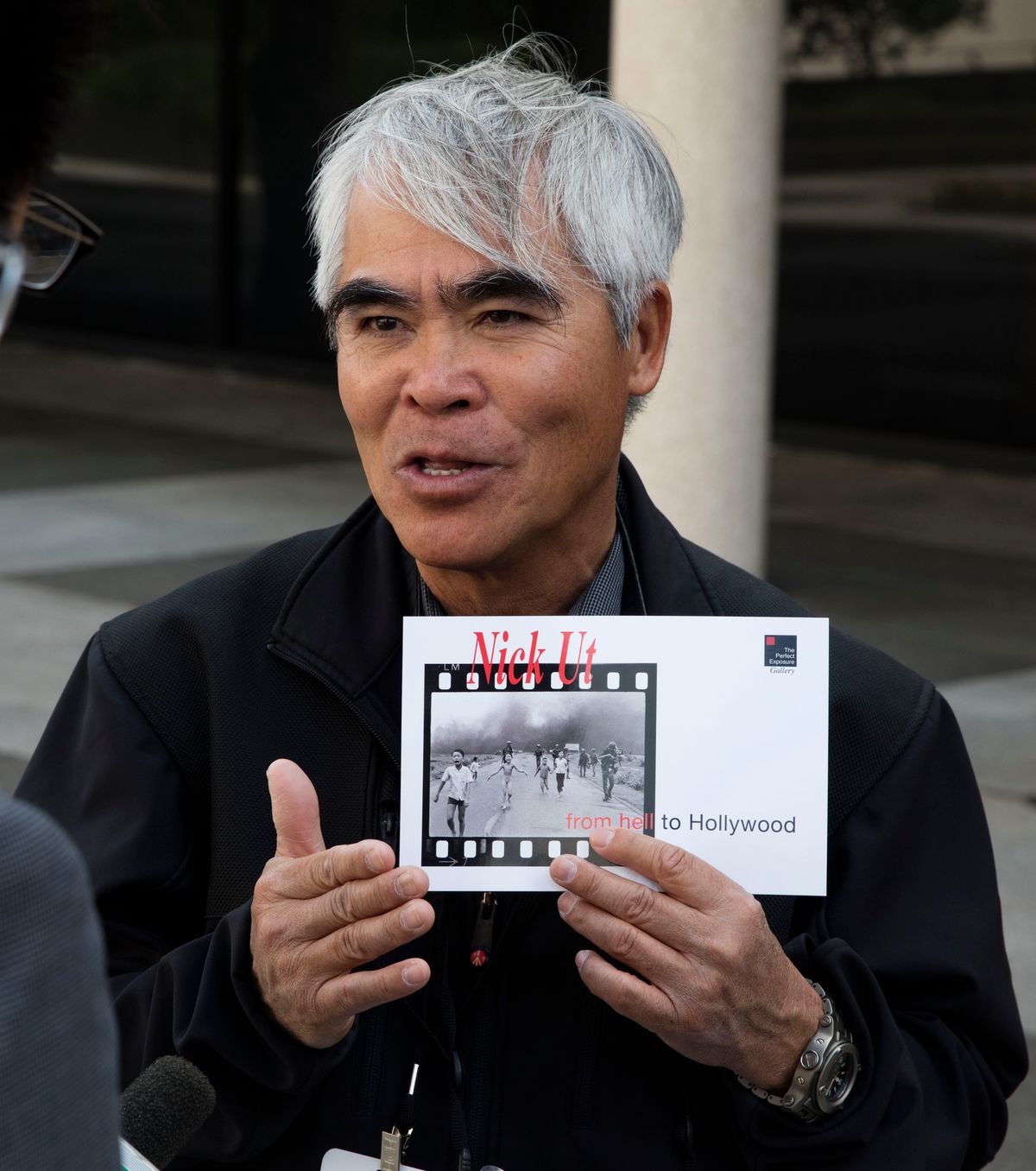
Associated Press Photographer Nick Ut in 2016. Photo by David Hume Kennerly
IT WAS IN THE EARLY 1970s that I sat with students at a Colorado university to light candles and sing protest songs. It sounds so quaint now. Some of my grandchildren, awakened to that tumultuous period of history by their teachers, ask me if I was a hippie war protester. The answer is no, I had a job and kids and was not active in politics.
A tide of outrage was growing across the United States. The war in southeast Asia seemed to be accomplishing nothing except the deaths of men and women my age and younger, not to mention scores of horrific civilian deaths. Protests on college campuses and elsewhere cropped up again and again, sometimes turning violent. Others thought the agitation was overdone; we could trust our leaders to do the right thing, they said.
And then came two startling images, the first during the Tet Offensive in 1968 and a second four years later.
Images, whether evoked with film, songs, poetry, or with fiction, are powerful. When times are troubling, we often experience a vague gnaw somewhere inside, but when prodded by the unavoidable truth of an image such as the one held by famed photographer Nick Ut, above, the course of human events can be altered.
In June of 1972, Ut was a news photographer affiliated with the Associated Press when he heard about fighting in Trảng Bàng, a village under attack by North Vietnamese soldiers and defended by South Vietnamese troops. Civilians were caught in the middle. Napalm bombs were used by the South and mistakenly dropped on villagers. The anguish on the faces of the fleeing children in the photo is indelible. To President Nixon, the picture couldn’t have been real, but it was. And it was indisputably a formidable moment in The Terror of War, which is the formal title of Mr. Ut’s photo.
The second photo famously recorded the cruelty of war and the hatred that drives it. In that picture, taken by photographer Eddie Adams, a Viet Cong prisoner is assassinated in cold blood by a South Vietnamese officer, Brigadier General Nguyen Ngoc Loan. Adams was deeply affected by the image he captured. He said:
The war in Southeast Asia was a difficult time in American history. For those of us old enough to remember events in the 1960s and 1970s they’re painful even to recall. Yes, there were many protests, and there was palpable conflict among leaders. There was the speech of President Lyndon B. Johnson in 1968 that he would not seek re-election, which moved me as I listened on the car radio. Whatever I felt about him, Johnson’s words and his inflection in that speech revealed the agony the war was causing not just him but all Americans.2 There was the Kent State shooting on May 4, 1970, in which student protesters were killed by Ohio National Guardsmen. And there were the leaked Pentagon Papers that revealed in 1971 the many, many lies told over more than 20 years about both the scope of the involvement and the unlikelihood of victory in Vietnam.3 And today, like many men and women my age, we recall friends who were killed or injured or irrevocably hurt by the hopeless war.
As now, the nation then was deeply divided, and protests helped to end the conflict. But it must be noted that protesters then often misdirected their anger. Objection to policies by political powers was both helpful and appropriate, but when returning soldiers were spat at, or on, the damage was not soon forgotten. The former produced pressure to end the war; the latter produced resentment that lingers today. As resistance to the current president and his administration grows, appropriately in my opinion, it’s time to remind that the brush of outrage should not be so broad as to alienate our families, friends, neighbors, and others with whom we live and work. We must seek good language, not epithets. We must listen as well as speak.
Protest against the Vietnam war put enormous pressure on the administrations of Kennedy, Johnson, Nixon, and finally Ford. The agony over the conflict, the costs, the loss of human life lost, and the frustration with untruths were on television and in newspapers constantly. Countless demonstrations erupted in countless places around the country and abroad.
The pressure helped to hasten the end of the war. And perhaps capping it all was the photo of “Napalm Girl.”
As Ut said,
In a few days we will note the fiftieth year since the war ended on April 30, 1975.5 The Paris Peace Accords officially ended American involvement in 1973. Nixon resigned in 1974 because of the Watergate scandal, and South Vietnam was on its own. As Ut hoped, the war had ended, in part because of the horror captured on his Leica.
As Adams said, all wars are brutal, and he hoped his photo, even though he felt remorse for the honor given him for capturing it, would remain a reminder of what can happen in war.
Sadly, there is litte evidence of any lasting impact. Brutality is recorded still, in Ukraine and in Gaza, for example. Political powers here and abroad often are incredibly cruel. We long for better leadership, and we occasionally merely project what we wish for rather than to acknowledge what we have in woefully unprepared leaders.
Will there be similar images to martial resistance against the current administration that seems to embrace autocracy? It hasn’t yet emerged, but there are images of people being carted away by federal government officials without any opportunity to make their case in a court of law.6 There are famous and influential people warning about a repeat of history. 7
If nothing else, it’s time to pay close attention, because there are familiar signs of the advent of tyranny and the end of democracy. Are we there yet? Perhaps not, but it is time to dry the antennae and pay close attention. It may take that indomitable image, snapped with a Leica or an iPhone, to show more and more of us what the times require.
https://www.history.com/articles/pentagon-papers ↩
https://aboutphotography.blog/blog/the-terror-of-war-nick-uts-napalm-girl-1972 ↩
https://history.state.gov/milestones/1969-1976/ending-vietnam ↩
https://www.nbcnews.com/news/us-news/kilmar-abrego-garcia-deported-el-salvador-trump-immigration-what-know-rcna201708 ↩