About hope
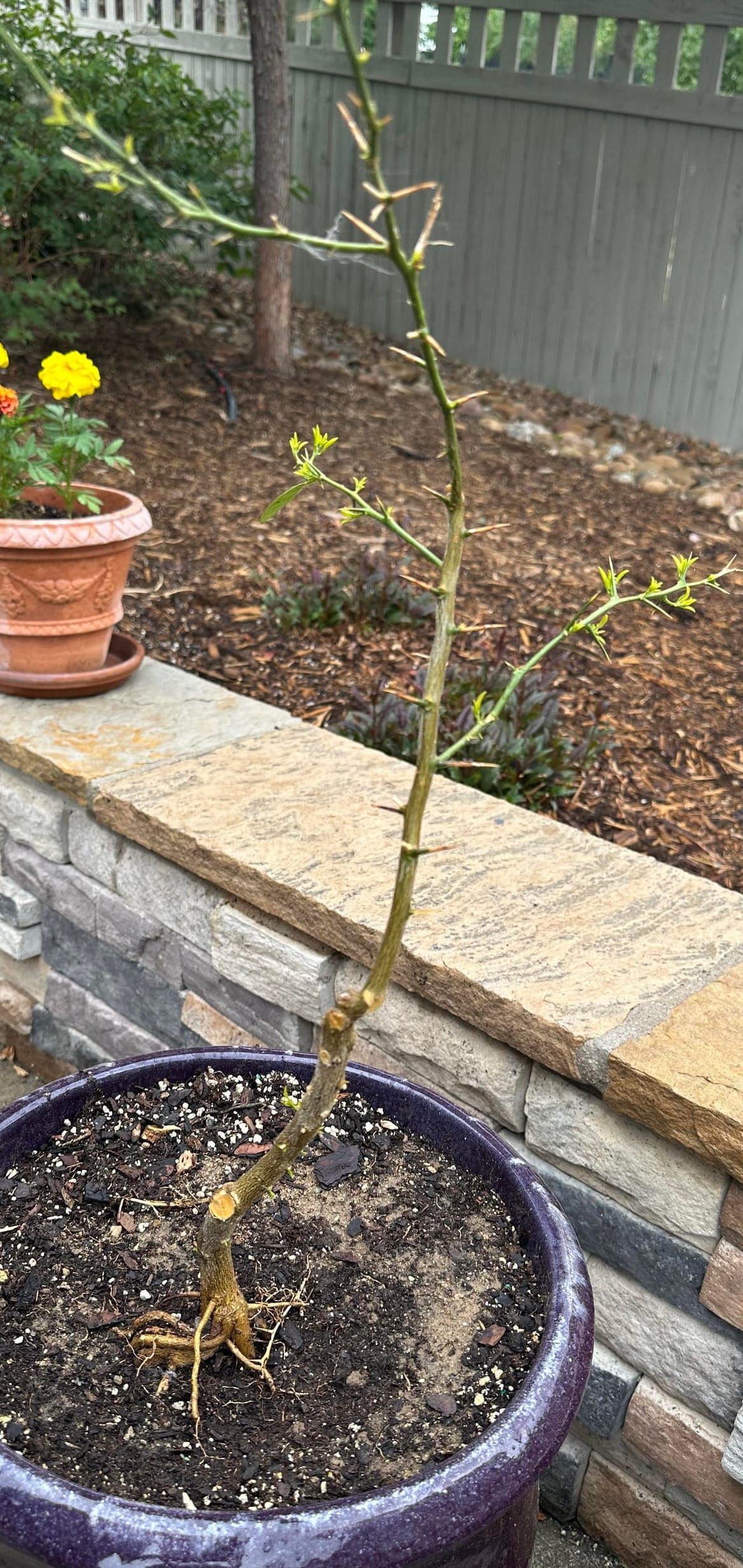
THE LIME TREE didn't do well. We brought it in last fall when it looked really good. Buds, lush leaves, an aggressive spirit when you messed with its branches. Thorns along the limbs. Always wear gloves.
Lime trees won't survive our cold, dry winters here in Colorado, so we nurtured it indoors from late September to mid-May. We left it out as long as we thought wise, but we know there can be early freezes in the fall, even though the daytime temperatures can be alluring. We brought it in when the forecast suggested the mercury might dip below freezing.
No small matter, because the Italian planter it had lived in is heavy. If it housed something else – annuals, for example – we would empty it and turn it upside down for the winter. But the lime tree seemed so happy. What could go wrong?
It wasn't the first time we kept it going during the winter. We had one other winter-time experience that actually went quite well. Last fall, we placed it where it had been before, and again it seemed fine. But a few rearrangements in the room where it was placed necessitated a change. We selected a north-facing window, thinking that would help induce a winter dormancy.
We kept it watered, of course, not copiously but sufficiently. It seemed contented.
But in January, we noticed a few leaves had dropped off. By the end of February, a few more. In March, the soil beneath its small limbs was littered with leaves, and by the end of May we found ourselves impatient for the arrival of the average-last -freeze time. We hoped the warming sun would lift it from its fragile state like Lazarus lifted from the grave.
It began to look hopeless. It lost all of its leaves, and when we bent some of the branches to test their suppleness we were greeted with the dreadful snap. We pruned away the obviously dead branches, but we retained a glimmer of hope for the single trunk that remained, a sad looking spike of life that even if it grew would be homely if not homeless. We transplanted it from the Italian terracotta to a smaller glazed pot, knowing at least it would be easier to get it inside if we decided to try one more winter-over.
In a few days, buds began to form here and there on the spike, even a couple that were barely visible near the soil.
Enthusiastically we checked the plant each morning as the last few days of May drifted into June. The photo above may present a dubious plant, but the green on its trunk was encouraging. And now, by the end of June, it is looking good:
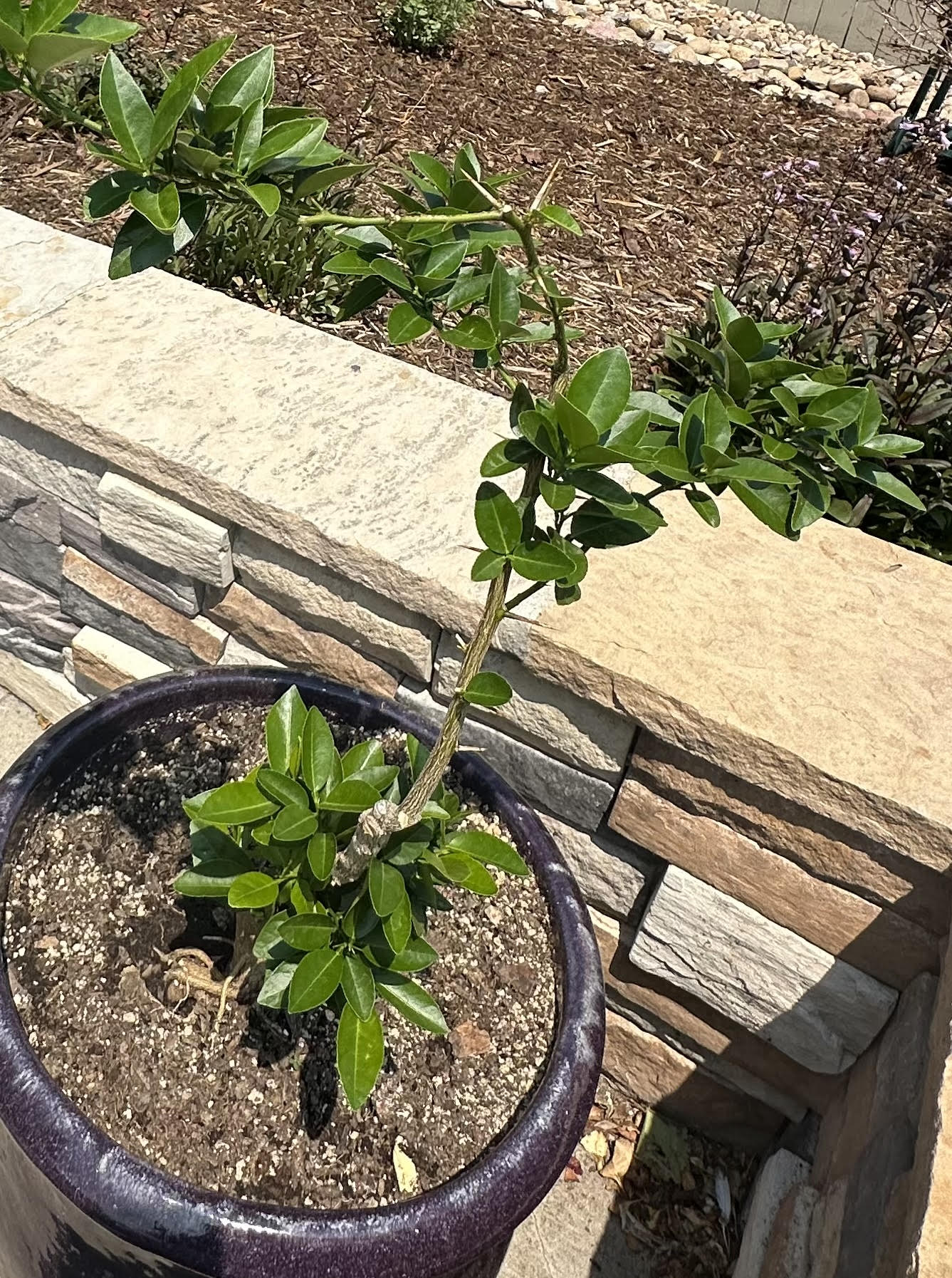
You may see a growing lime tree, and I do, too. But I also see a metaphor, because in the months since we brought it in we have confronted a variety of sad, even hopeless events. At times our lives seemed as bare and unpromising as the trunk of that poor lime tree looked just earlier this month. Are we to blame? Should we have known better? Should we have not moved it? Should we have uprooted and discarded it instead of trying to care for it? Should we move to Florida or California if we want citrus?
Well, you can begin to see the metaphorical possibilities. It's tempting at times to just give up, throw up our hands in utter despair. It's also common to impute blame: It's probably our fault. We should have, we shouldn't have, etc etc.
It is, however, possible to find inspiration in nature too. What we may not notice is that within the resin of calamity, there remains a moving (however slowly) pool of energy. What seems hopeless, may not be so. What is required at such times is simple patience, a confidence rooted in hope. Call it faith, if you like, as suggested in the epistle to Hebrews: "Now faith is the substance of things hoped for, the evidence of things not seen."
Who knows; maybe the lime tree will even yield a nice fruit I can juice for an evening margarita, something I dearly appreciate. To be sure, that will require a bit of patience, perhaps another winter-over (or two), and a rush of summer-time sun and water. It will be worth waiting for.
In the meantime, I will ponder the lime tree and its potential messaging. We need a good dash of hope from time to time, and this is one of those times.